
The No-Stress Guide to the Malaysia e-Invoice Implementation Update and What Every Business Owner Actually Needs to Know for 2026
Chances are if you’ve ever been hanging around your local kopitiam or browsing through your LinkedIn feed of late, you’ve heard everybody talking about “Malaysia e-Invoice Implementation “, whatever that means to you may depend on who you ask. To some it may seem like another headache related to “digitalization” while to others it might just be something they’d be hoping their accountant is taking care of for them however we can all be honest with each other, ignoring it isn’t going to be an option anymore.
The Malaysian Government has been driving this change for a few years now and as you may be aware we are right in the midst of it. Sending a PDF file attached to a WhatsApp message or Email is not going to cut it anymore this is now an entirely different method of reporting how money is moving through your business. If this sounds like you’re feeling somewhat lost as to what’s going on rest assured the majority of people are feeling exactly the same way and are asking the question “Do I now have to change all of my software or am I allowed to continue running things the same way I have for now?”
The Reality of the Malaysia e-Invoice implementation update
Firstly I want to explain why this is happening. Previously when you reported your financials to the Malaysia Inland Revenue Board (LHDN) they would only see your numbers once a year when you completed your yearly tax return now in the Malaysia digital tax invoice system they are effectively able to see each of your individual transactions as they are made on a near real-time basis. A better way to explain this would be to compare it to reporting your performance annually on a report card versus them having a live GPS tracker on your business and being able to track your sales at any point in real-time.
Understanding the LHDN system requirements
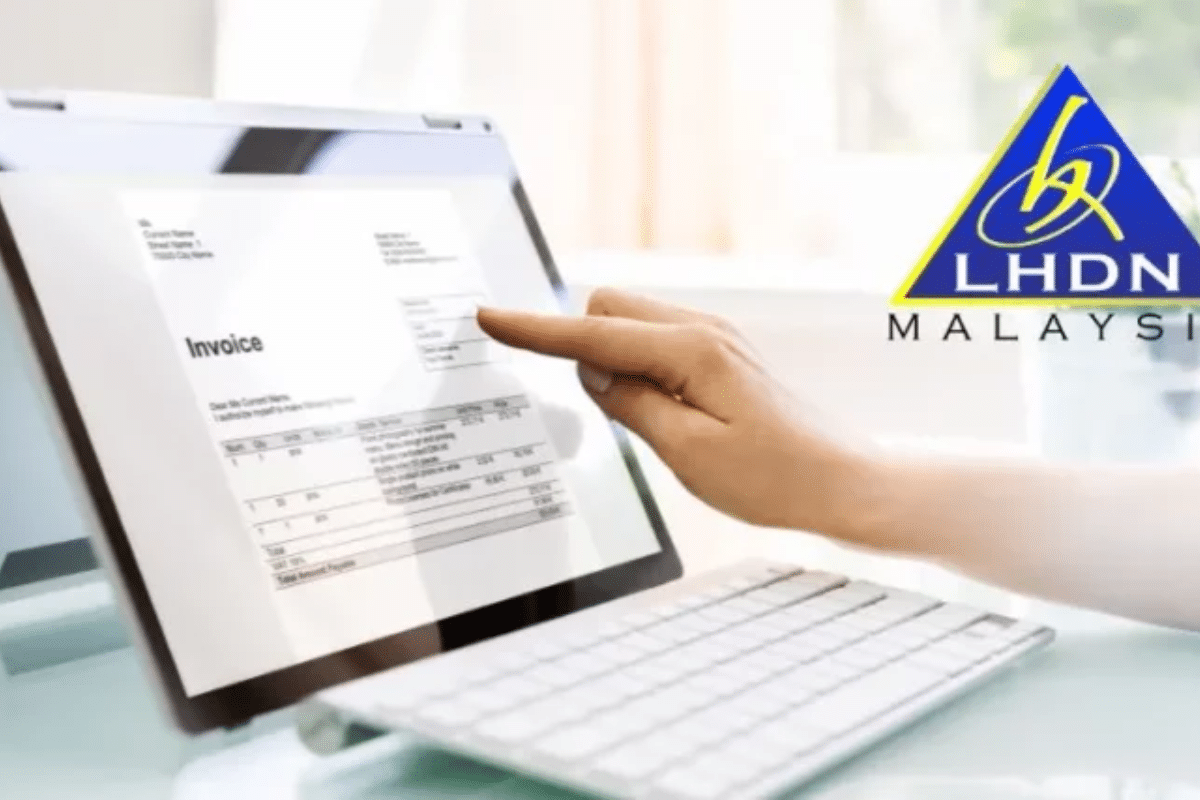
An e-invoice is often misconstrued as being merely an electronic counterpart to a paper invoice. This is partially incorrect and partially true. An e-invoice under LHDN e-Invoice Malaysia, is in fact a prescribed format (XML or JSON) that must be “validated” by means of LHDN’s MyInvois portal, before it can be officially deemed to be a legitimate tax document.
Let’s say that you sell to a client, a quantity of spare parts. Normally, you would print out the invoice and then send it by mail or email as a PDF. Now, your system will need to send an invoice to LHDN’s system for approval first, prior to sending the invoice to your client. This is done through the use of a “digital stamp” (a unique identifier), which is issued to your invoice from LHDN. Once you have this stamp, you may then forward the invoice to your client. This will assure that what you are declaring to be a sale and what your client is declaring to be an expense, matches in the government’s records exactly.
For those of us with medium to small businesses looking to implement e-Invoice Malaysia, you don’t need to hire a dedicated IT department. There are two methods of doing this: through the MyInvois Portal (for low volume) or through API (which is basically enabling your accounting system to communicate to the LHDN system). The majority of SMEs are opting for the later due to the fact that it would be a waste of time to manually enter each invoice into a government portal every time a sale has been made.
Why Malaysia e-Invoice for SMEs is a big shift
IIf you’re a small business and you think “I only have a few employees, do I really need this?” The answer to that question is yes. The e-Invoice for SMEs phase of Malaysia is arguably the most significant implementation of e-Invoicing because it covers the largest group of businesses in the country.
The most notable change with the implementation of e-Invoicing will not simply be the software; rather, it will be the data. The e-Invoicing will require your customer’s TIN (Tax Identification Number), their SST registration number. If applicable, and for certain transactions the customer’s IC or passport number. It may be somewhat “awkward” for you to ask your long-term clients for their TIN, SST and/or their IC or passport number.
Another item people often forget about in discussions regarding the implemented updates to the e-Invoicing system, Malaysia 2026, is the “Consolidated e-Invoice.” For businesses such as cafes and retail stores where you serve hundreds of small customers that do not need a formal sales tax invoice, using the “Consolidated e-Invoice group your sales and only report to the government once a month.” Small details such as these make it easier to transition into this new system of e-Invoicing.
Navigating the Malaysia e-Invoice regulations without panic
The legal jargon that comes with the Malaysia e-Invoice regulations can be quite intimidating. When broken down, however, it primarily revolves around ensuring transparency. The government has introduced these regulations as a method of controlling the shadow economy, and to make tax collection simpler and more efficient. A “plus point” for us is that it can simplify our bookkeeping by providing a clear and auditable record of transactions, eliminating lost receipts or odd gaps in the accounts when everything is stored electronically.
Looking at the Malaysia e-Invoice rollout schedule we’re currently in the transition phase where some of the larger companies are already using the e-Invoicing system. You may have even received an e-Invoice from your telco or electric utility provider. As such, it gives the rest of us an opportunity to witness how it works during this transition period before it eventually becomes obligatory for everyone else in the country.
If you’ve been using manual books, or have very inferior offline software, beginning your search for cloud-based solutions should be your priority. Local companies such as AutoCount and other providers are currently in the process of upgrading their products to be compatible with e-Invoicing. It will be exponentially easier to have your software provider facilitate the API connectivity than for you to attempt to develop the necessary code on your own.
Practical steps to stay ahead

Today may be the day for you to do something. Don’t wait until June 2025 to start asking questions. First, check your current tax status with LHDN (Corporate Income Tax) and ensure that your company’s details in the LHDN system are up-to-date. Second, talk to your software provider because they are working very hard to develop the “handshake” between your company’s systems and LHDN. Keep track of your cash flow! You might incur a small initial expense for a software upgrade or staff training before you start seeing the long-term savings from digitalization. Think about how much time you spend chasing down paper documents or correcting human errors related to entering data manually; that time can be used to help your company grow.
Finally, watch for the latest updates on Malaysia e-Invoice Implementation Update. The rules change often, and LHDN regularly publishes updated FAQs to answer common issues companies experience when starting the e-invoicing system. Staying informed will help ensure you are aware of new requirements before they hit you. There is a movement toward “digitizing” Malaysia, and while there may be some “growing pains” involved in transitioning from paper to electronic systems, we’re going to get through this process if we do it one step at a time. We have dealt with significant changes in how we run our businesses in Malaysia before, and this is just another phase in the continuing evolution of how we do business in Malaysia.