
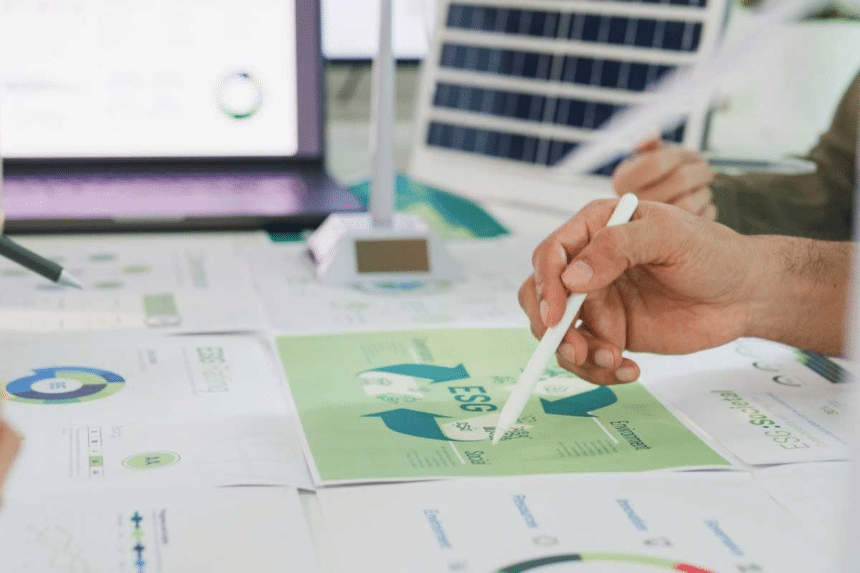
When “Go Green” Stops Being a Slogan: Understanding Green Business Strategies in Malaysia
In Malaysia, “going green” used to sound like something only big corporations talked about during annual dinners or in glossy sustainability reports. SMEs were busy surviving—managing cash flow, handling staff turnover, chasing payments. But recently, something shifted. Suppliers are being asked to submit carbon data. Export partners want ESG disclosures. Even local tenders are starting to include environmental criteria. Suddenly, Green business strategies are not just branding exercises. They are showing up in procurement emails and compliance checklists.
A lot of business owners are quietly asking the same thing:
Is this just another trend, or is this something we really need to understand properly?
⚠️ 2026 Core Insight: From “Brand Image” to “License to Operate”
In the 2026 landscape, Malaysian enterprises are no longer facing a choice of whether to reduce emissions, but rather “how much longer can we remain in the supply chain without carbon accounting?” As export tax incentives, green procurement, and mandatory disclosures from MNCs become standard, carbon credits have shifted from a financial “appendix” to essential business insurance.
Why 2026 Feels Like a Turning Point in Malaysia
Many people don’t realise this, but Malaysia’s sustainability push is not happening in isolation. Our trade partners are moving fast. The EU has carbon border mechanisms. Multinationals operating in Penang and Johor are tightening reporting standards.
So when people talk about Green business strategies Malaysia 2026, they’re not predicting something far away. They’re reacting to pressure already happening upstream.
Imagine you run a small manufacturing firm in Selangor. Your biggest client is a regional electronics brand. They now require carbon reporting from Tier-2 suppliers. You may not even export directly, but suddenly you’re affected.
This is where Carbon reduction strategies for businesses stop being theoretical. It becomes operational. Not glamorous. Just necessary.
It’s Not Only About Carbon — It’s About Structure
When business owners hear “green,” they often think solar panels, recycling bins, electric vehicles. That’s the visible part. Behind it, Green business transformation Malaysia usually starts with structure. Energy audits. Waste mapping. Supplier review. Data collection systems. Sometimes even rethinking logistics routes to reduce fuel usage.
Simple example. A food processing SME in Melaka realised their refrigeration ran 24/7 at full capacity, even during low-load hours. After reviewing usage patterns, they adjusted scheduling and cut electricity costs significantly. That’s a Sustainable operations strategy 2026 move — not dramatic, but strategic.
Low-cost green business strategies often begin exactly like that. Small internal efficiencies that reduce both emissions and bills.
Green business strategies Startups See It Differently
Interestingly, startups are not treating sustainability as compliance. Many see it as positioning. Green growth strategies startups Malaysia are emerging in sectors like agritech, circular packaging, and carbon accounting tech. For them, ESG-driven business strategy Malaysia is not an add-on; it’s built into the model from day one.
Some founders openly talk about Sustainable competitive advantage ESG. Not in corporate jargon, but in practical terms: “If we design our supply chain clean from the start, we won’t need to retrofit later.” That thinking changes everything.
Green business models Malaysia startups are experimenting with subscription-based reuse systems, biodegradable materials, and local sourcing networks. They are betting that regulatory tightening will eventually reward early movers.
Green business strategies SMEs Are Asking: Is This Affordable?
This question comes up in almost every closed-door discussion. Can SMEs realistically adopt Sustainable business strategies for SMEs without hurting margins? The short answer many consultants give is “yes.” But the honest answer is: it depends on sequencing. A Green business roadmap Malaysia is not about doing everything at once. It’s about identifying leverage points.
For some, it starts with energy efficiency. For others, supplier consolidation reduces transport emissions. Some focus on packaging redesign because customers directly see it.
One Klang-based distributor shared that switching to lighter packaging reduced shipping weight enough to lower fuel costs. It wasn’t marketed as sustainability. It was a cost decision. But it aligned with carbon reduction outcomes anyway. That’s often how real change happens.
The Quiet Shift in Corporate Conversations
Another subtle change: boardroom language. Five years ago, sustainability discussions sat under CSR. Today, Sustainable operations strategy 2026 conversations are linked to risk management and long-term resilience. Banks are starting to factor ESG disclosures into lending terms. Investors ask about transition risk. Even insurance pricing can be influenced by environmental exposure.
So when people refer to ESG-driven business strategy Malaysia, it’s less about “being ethical” and more about staying investable. It’s a structural evolution.
- Bank Negara Malaysia – Climate Change and Principle-based Taxonomy (CCPT)
🔗 https://www.bnm.gov.my/documents/20124/938039/Climate+Change+and+Principle-based+Taxonomy.pdf
- Bursa Malaysia – Sustainability Reporting Guide (3rd Edition)
🔗 https://my.bursamalaysia.com/learn/bursa-sustain/explorer/sustainability-reporting-guide-and-toolkits-3rd-edition
- Ministry of Investment, Trade and Industry (MITI) Malaysia – ESG-related Framework / National Investment Aspirations
🔗 https://www.miti.gov.my/NIA