
What the Latest Movements on Bursa Malaysia Really Mean for Everyday Investors
If you’ve been checking Bursa Malaysia lately, you probably noticed the tone feels a bit cautious. Not dramatic. Not panic selling. Just softer than before. Recent coverage highlighted that the market slipped around midday following hawkish cues from the US Federal Reserve. Earlier sessions also closed lower, broadly in line with regional markets, as concerns over US banking stability and tariff issues resurfaced. On the surface, it looks like “just another red day.” But many Malaysians quietly wonder the same thing: why does something happening in the US affect what’s happening here in KL?
⚠️ 2026 Core Insight: Global Signals Now Shape Local Sentiment
In 2026, Bursa Malaysia is reacting less to isolated domestic headlines and more to global liquidity conditions. When the US Federal Reserve signals higher-for-longer rates or when tariff risks resurface, capital flows adjust across regions. The result is not necessarily structural weakness — but faster sentiment shifts that ripple into Malaysia almost immediately.
When the US Fed Sounds “Hawkish,” Why Does KL Feel It?
Let’s slow this down. When reports say the US Federal Reserve is “hawkish,” it usually means interest rates may stay elevated or even rise further. Higher US rates tend to strengthen the US dollar and make US assets more attractive.
Now imagine you are a global fund manager. If US Treasury yields look safer and more rewarding, reallocating part of your portfolio becomes logical. That shift — even if temporary — creates selling pressure across emerging and regional markets, including Bursa Malaysia. It’s not always about Malaysia underperforming. Sometimes it’s simply capital flowing to wherever returns look steadier.
Regional Losses and Tariff Worries Travel Fast
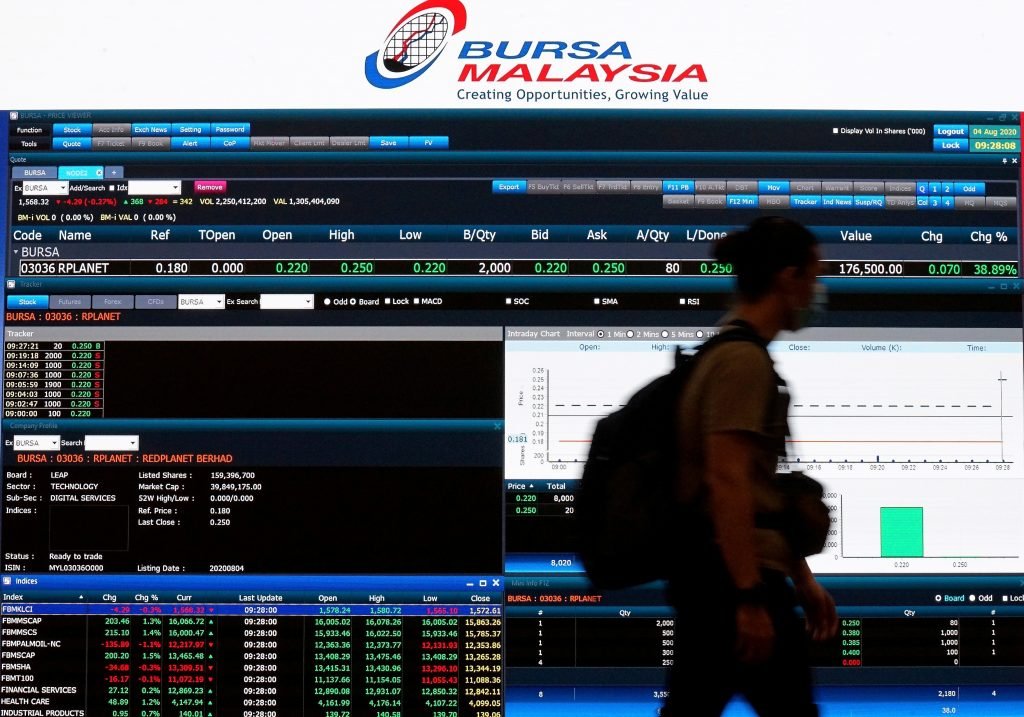
The earlier report noted that Bursa Malaysia ended lower in line with regional markets amid US banking and tariff concerns. Many first-time investors don’t realise this: Asian markets often move together when the trigger is global. If Tokyo, Seoul or Hong Kong open weaker due to risk-off sentiment, KL rarely trades in isolation.
Add tariff worries into the mix and the reaction becomes sharper. Malaysia is a trade-reliant economy. Electronics exports, commodities, manufacturing supply chains — all linked to global demand. So when tariff uncertainty resurfaces, expectations about margins and export volumes adjust immediately. Even before any real policy change, investor sentiment shifts.
One small detail matters: “lower at midday.” Markets respond quickly to overnight global developments. But intraday dips don’t automatically signal deeper economic deterioration. Sometimes it’s positioning. Sometimes it’s short-term de-risking. Sometimes traders simply reduce exposure before major announcements. The challenge for retail investors is emotional. You open your trading app during lunch break and see red. It feels personal. But often, it’s part of a broader global adjustment cycle.
What Bursa Malaysia 2026 Is Quietly Showing Us
Across the recent developments, one pattern stands out: sensitivity. Bursa Malaysia in 2026 appears increasingly responsive to global liquidity signals. Rate expectations in the US, regional risk appetite, and geopolitical trade tensions now frame daily movements more than isolated local stories. This doesn’t mean domestic fundamentals no longer matter. They do. But in the short term, global capital flow sets the tone.
Understanding that connection changes how you read the market. A softer session may reflect global recalibration rather than local weakness. And sometimes, seeing the bigger picture makes the daily volatility feel less confusing — and a little less stressful.
Bursa Malaysia’s recent pullback aligns closely with hawkish US Fed cues and renewed regional concerns. The pattern suggests that global sentiment and capital flows are shaping short-term movements more strongly than ever. For everyday Malaysians watching the market, the key is context. Not every dip signals structural problems. Often, it reflects how interconnected financial markets have become.